

1. Economy & Geopolitical Impact
2. Bullion Update: Gold & Silver
3. Energy Watch: Fuel & Gas Prices
4. Kitchen Essentials: Veggies & Dairy
5. Frequently Asked Questions
Economic Outlook: Geopolitics and Your Wallet
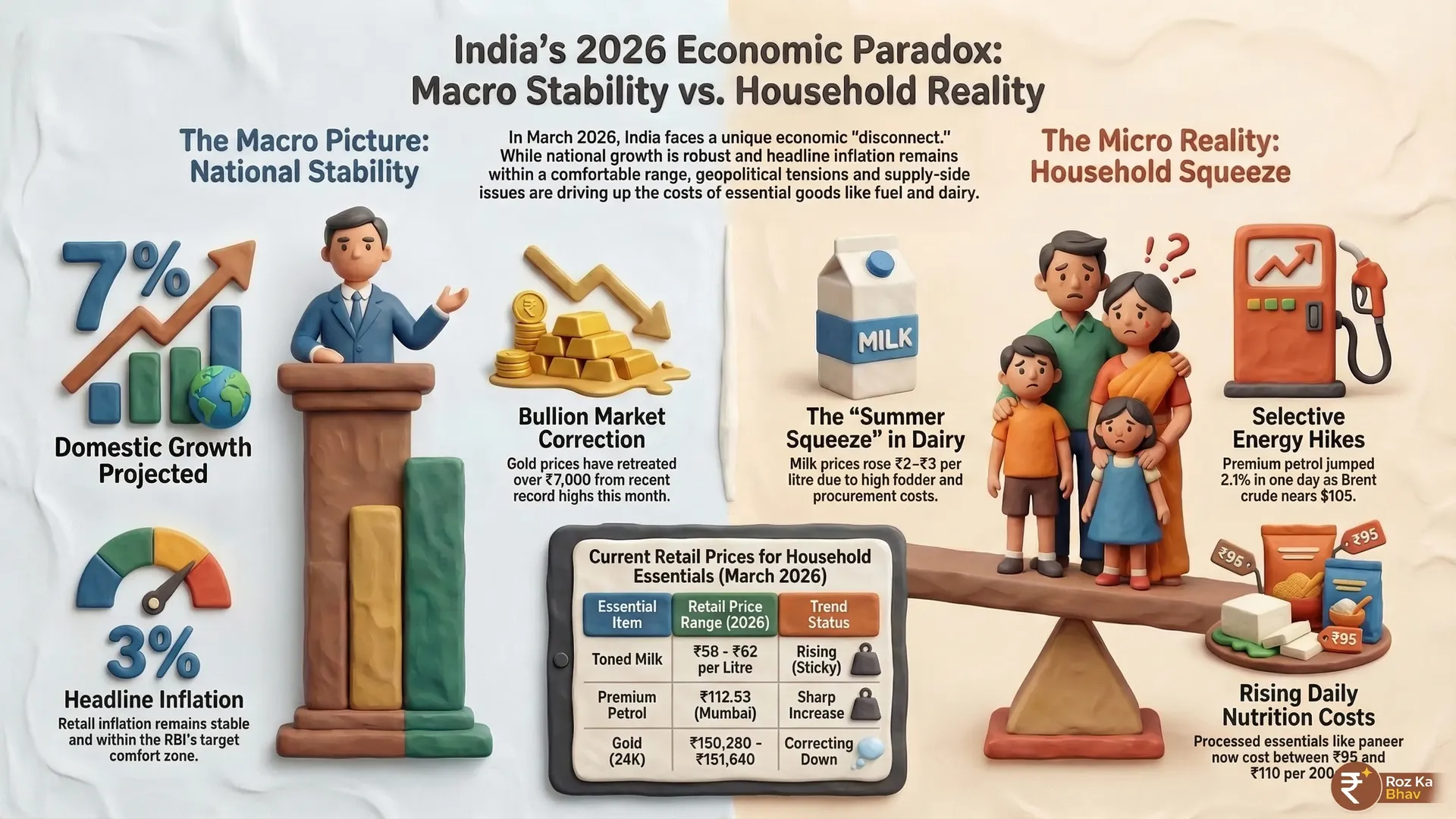
As dawn broke over Mumbai’s financial district today, the air felt heavy with more than just March humidity; there is a palpable sense of caution among traders. The reality for the Indian economy right now is a balancing act between strong domestic growth and a chaotic global energy map. While the government’s shift in energy sourcing trading Russian oil for a deeper US energy pact has stabilized trade relations, it has also made us more sensitive to the strength of the US dollar.
The Reserve Bank of India (RBI) finds itself in a delicate position. According to our latest tracking of high-frequency data, retail inflation for the final quarter of FY26 is hovering around 3%, which looks excellent on paper. However, “imported inflation” from the West Asia conflict remains the wildcard. It is a strange time: the broader economy is robust with 7% growth projections, yet the average consumer is watching premium fuel and milk bills steadily climb.
Spillover from Iran-Israel-US tensions has finally reached the retail level, albeit selectively. While the government is working to shield consumers by freezing “ordinary” petrol prices, the hike in premium variants serves as a signal. It is a warning shot that if Brent crude remains above the $105 mark, regular fuel prices may be the next to move.
Bullion Market Trends: The 2026 Gold Correction
If you have been waiting to buy gold for a summer wedding, today might be the opportunity you were looking for. After a dizzying run that saw gold touch nearly ₹1.60 lakh per 10 grams earlier this month, the yellow metal is finally cooling off. On Friday and through the early hours of Saturday, domestic gold rates tumbled, dropping by over ₹7,000 per 10 grams in several cities.
Silver is not faring much better. It has been a wild ride for silver investors; after a 130% surge in 2025, industrial demand from solar manufacturers has started to thrift using less silver to reduce costs. This has removed some of the froth from the market. Here is a look at the current rates across major metros.
Latest Gold & Silver Rates (March 21, 2026)
Note: Data based on 2026-03-21.
| City | 24K Gold (10g) | 22K Gold (10g) | Silver (per kg) |
|---|---|---|---|
| New Delhi | ₹1,50,430 | ₹1,37,900 | ₹2,59,000 |
| Mumbai | ₹1,50,280 | ₹1,37,750 | ₹2,58,800 |
| Chennai | ₹1,51,640 | ₹1,39,000 | ₹2,64,000 |
| Bengaluru | ₹1,50,280 | ₹1,37,750 | ₹2,59,100 |
Why the sudden drop? It is largely due to a hawkish stance by the US Federal Reserve, which has pushed the dollar to multi-month highs. When the dollar strengthens, gold which is priced in dollars globally becomes more expensive for other countries, often leading to a sell-off. For the Indian buyer, this global trend offers a breather. However, do not get too comfortable; technical analysts at
The Times of India
suggest that as long as gold holds the ₹1,50,000 support level, the long-term trend remains bullish.
Energy Sector Update: Premium Petrol Hikes
Commuters in Mumbai and Delhi faced a surprise at the pumps this morning. If you use premium fuels like ‘Speed’ or ‘Power’, you are paying roughly ₹2.09 per litre more today. In Mumbai, premium petrol has reached ₹112.53. This is a direct consequence of West Asia war fears disrupting the Strait of Hormuz.
Interestingly, ordinary petrol and diesel prices have remained unchanged. State-run oil marketing companies are currently absorbing the losses on regular fuel to maintain price stability. However, if Brent crude continues to hover around $105 per barrel, the pressure to adjust all retail prices will become significant.
Current Fuel & Gas Prices
Note: Data based on 2026-03-21.
| Fuel Type | Delhi (per L/kg) | Mumbai (per L/kg) | 6-Month Change |
|---|---|---|---|
| Petrol (Ordinary) | ₹94.77 | ₹103.54 | 0% |
| Premium Petrol | ₹104.85 | ₹112.53 | +2.1% (Since yesterday) |
| Diesel | ₹87.67 | ₹90.03 | 0% |
| CNG | ₹77.09 | ₹77.00 | +3.3% (Since Sept) |
Regarding gas prices, LPG rates are holding steady following a ₹60 hike earlier this month. For CNG users, the market is relatively quiet. We have not seen a major hike in recent weeks, though green fuel is no longer as cheap as it once was. The long-term trend for CNG has been a gradual increase rather than the sharp shocks seen in the oil market.
Kitchen Inflation: The Summer Squeeze
The Indian kitchen is currently at the front line of the inflation battle. We are seeing an unusual phenomenon: wholesale prices for some vegetables are down year-on-year, yet local vendors are often charging more. This middleman margin, combined with rising summer heat, is starting to affect the supply of leafy greens.
The more significant story is dairy. Major players like Amul and Mother Dairy, along with regional giants like Gokul and Chitale, have adjusted prices upward. According to reports from
Hindustan Times,
milk procurement costs for farmers have risen by ₹4 per litre, which dairies are now passing on to consumers.
Dairy & Vegetable Price Trends
Note: Data based on 2026-03-21.
| Item | Unit | Today’s Price (Avg) | Trend |
|---|---|---|---|
| Milk (Toned) | 1 Litre | ₹58 – ₹62 | Rising (↑) |
| Potatoes | 1 Kg | ₹25 – ₹30 | Stable (→) |
| Onions | 1 Kg | ₹35 – ₹45 | Volatile (⇅) |
| Paneer | 200g | ₹95 – ₹110 | Rising (↑) |
The milk hike is particularly difficult because it is a sticky price it rarely decreases once adjusted upward. This is partly because India is now a major exporter of milk powder. As global demand rises, domestic supply tightens. When combined with expensive fodder, the result is higher daily costs for tea, coffee, and essential nutrition.
Frequently Asked Questions
Source & Price Verification – Financial Markets
- Gold & Silver Prices: Data referenced from IBJA, MCX India, and international benchmarks.
- Petrol & Diesel Rates: Daily retail prices sourced from Indian Oil, HPCL, and BPCL.
- Commodity Market Data: Verified using MCX, NCDEX, and government statistical releases.
- Verification Process: Prices are cross-checked with at least two independent official or exchange-based sources before publication.
- Disclaimer: Market prices are indicative and may vary by city, tax structure, or intraday volatility.
Note: Prices are updated daily and cross-checked before publishing. If you notice any discrepancy, please email us at [email protected].
