

Bullion Market: Gold & Silver Analysis
Energy Watch: Petrol, Diesel, and CNG
Kitchen Essentials: Veggies & Dairy
Market Outlook & Expert Commentary
Frequently Asked Questions
Bullion Market Analysis: The Correction in Gold and Silver
Walking into a jewelry store in Zaveri Bazaar this morning reveals a starkly different atmosphere than the frantic buying seen in early March. The gold rally which once seemed unstoppable has hit a significant speed bump. This shift has surprised many local investors who were previously eyeing the ₹1.60 lakh milestone.
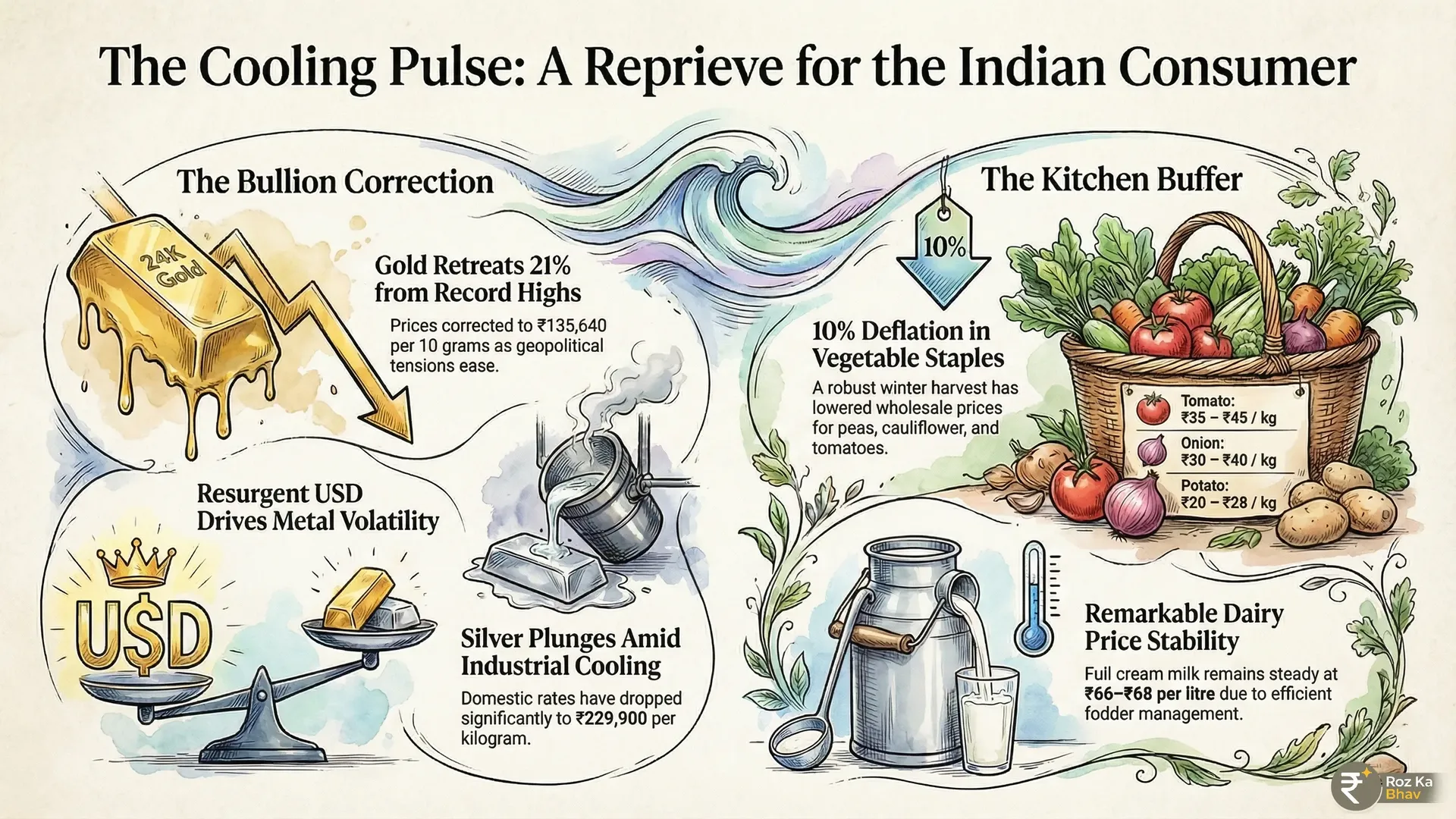
Today, 24K gold is trading near ₹1,35,640 per 10 grams a staggering drop of nearly 21% from the peaks recorded earlier this month. The primary driver is a Resurgent US dollar; as the Greenback strengthens, precious metals priced in dollars become more expensive for international buyers, naturally dampening global demand. Furthermore, a slight de-escalation in West Asian tensions has reduced the safe-haven premium that previously supported higher prices.
Silver has faced even sharper volatility domestic rates have plunged to approximately ₹2,29,900 per kilogram. This is a significant decline from the ₹3 lakh levels seen recently. Market tracking indicates that industrial demand for silver is also cooling, adding further downward pressure on the metal.
Current Gold & Silver Rates: March 24, 2026
Note: Data based on 2026-03-24.
| Category | Rate (per 10g / kg) | Daily Change |
|---|---|---|
| 24K Gold (99.9% Purity) | ₹1,35,640 | – ₹10 |
| 22K Gold (91.6% Purity) | ₹1,24,340 | – ₹10 |
| Silver (999 Fine) per kg | ₹2,29,900 | – ₹100 |
Energy Watch: Fuel Stability and Regional Tax Changes
Commuters in Delhi and Mumbai found familiar numbers at fuel stations this morning. Despite the bullion market chaos and fluctuations in international Brent crude currently hovering near $85 a barrel Oil Marketing Companies (OMCs) have maintained steady retail prices. This period of stability appears to be a government priority to manage transportation-led inflation.
However, the situation differs by region. Drivers in Himachal Pradesh are feeling a new pinch the state government recently passed a bill to levy a cess of up to ₹5 per litre on petrol and diesel. While intended to bolster state revenue, it remains a frustrating outlier in an otherwise stable national price landscape.
Fuel Rates in Major Indian Metros
Note: Data based on 2026-03-24.
| City | Petrol (per Litre) | Diesel (per Litre) |
|---|---|---|
| New Delhi | ₹94.77 | ₹87.67 |
| Mumbai | ₹103.54 | ₹90.03 |
| Kolkata | ₹105.45 | ₹92.02 |
| Chennai | ₹101.23 | ₹92.39 |
CNG prices also remain largely unchanged across the National Capital Region (NCR) and Mumbai. According to data from The Economic Times, the focus has shifted toward securing long-term LNG contracts to prevent the price spikes seen during the peak of last year’s energy crisis.
Kitchen Essentials: Price Relief at the Mandi
The cost of tomatoes and onions often dominates household discussions, but today brings welcome news. Wholesale Price Index (WPI) data for late March suggests a month-on-month decrease of over 10% for peas, cauliflower, and tomatoes.
The winter harvest has reached the markets in full force. In Delhi’s Azadpur Mandi, tomato prices have stabilized following a volatile February. While the government continues to monitor onion prices to prevent hoarding, the overall thali cost is trending downward a much-needed breather after erratic weather patterns impacted earlier crop yields.
Vegetable & Dairy Price Trends
Note: Data based on 2026-03-24.
| Item | Retail Price (Avg) | Price Trend |
|---|---|---|
| Tomatoes (per kg) | ₹35 – ₹45 | Falling |
| Onions (per kg) | ₹30 – ₹40 | Stable |
| Potato (per kg) | ₹20 – ₹28 | Falling |
| Milk (Full Cream – per L) | ₹66 – ₹68 | Steady |
On the dairy front, prices have remained remarkably flat. Unlike the sharp spikes of 2024 – 25, dairy cooperatives have maintained steady supplies. Based on current exchange data and the latest WPI press release, milk inflation is hovering at a manageable 3% largely due to better fodder management and a lack of major disease outbreaks among cattle this season.
Market Outlook: Trends to Watch
The Indian economy currently sits in a wait-and-see phase. While the Sensex and Nifty are recovering from a difficult start to the month, the rupee continues to struggle against a rampant US Dollar.
Manufacturing and Services PMI data expected later today will be the next major catalyst. If these figures show that Indian factories remain resilient despite global headwinds, the rupee may claw back some losses. This could potentially lower the cost of imported crude and lead to future fuel price cuts; however, OMCs may prioritize shoring up their own balance sheets first.
For gold buyers, the general advice is caution it may be wise to wait for the price to find a floor near the ₹1.30 lakh mark before making significant moves. Geopolitics remains unpredictable; today’s de-escalation could easily reverse based on tomorrow’s headlines.
Frequently Asked Questions
The primary causes are a strengthening US dollar and cooling geopolitical tensions in West Asia. As the fear factor recedes, investors often move away from safe-haven assets like gold in favor of equities or dollar-backed securities.
While national retail prices are currently stable, regional adjustments such as the new cess in Himachal Pradesh are happening. Nationally, rates depend on the 15-day average of international crude, which remains volatile but has not yet forced a pump hike.
Increased supply from the winter harvest (Rabi crop) is finally reaching mandis. Improved logistics and favorable weather in key producing states like Maharashtra and Karnataka have helped ease supply-side bottlenecks.
Silver remains more volatile than gold. While the current ₹2.29 lakh level is lower than recent highs, analysts suggest watching global industrial demand; if manufacturing slows, silver could face further corrections.
Source & Price Verification – Financial Markets
- Gold & Silver Prices: Data referenced from IBJA, MCX India, and international benchmarks.
- Petrol & Diesel Rates: Daily retail prices sourced from Indian Oil, HPCL, and BPCL.
- Commodity Market Data: Verified using MCX, NCDEX, and government statistical releases.
- Verification Process: Prices are cross-checked with at least two independent official or exchange-based sources before publication.
- Disclaimer: Market prices are indicative and may vary by city, tax structure, or intraday volatility.
Note: Prices are updated daily and cross-checked before publishing. If you notice any discrepancy, please email us at [email protected].
