

1. Bullion Market: Gold & Silver Analysis
2. Energy Watch: Petrol, Diesel, and CNG Trends
3. Kitchen Essentials: Dairy and Vegetable Updates
4. Analyst Outlook: Understanding the Market Shift
5. Frequently Asked Questions (FAQs)
Bullion Market: The Gold Price Correction of March 2026
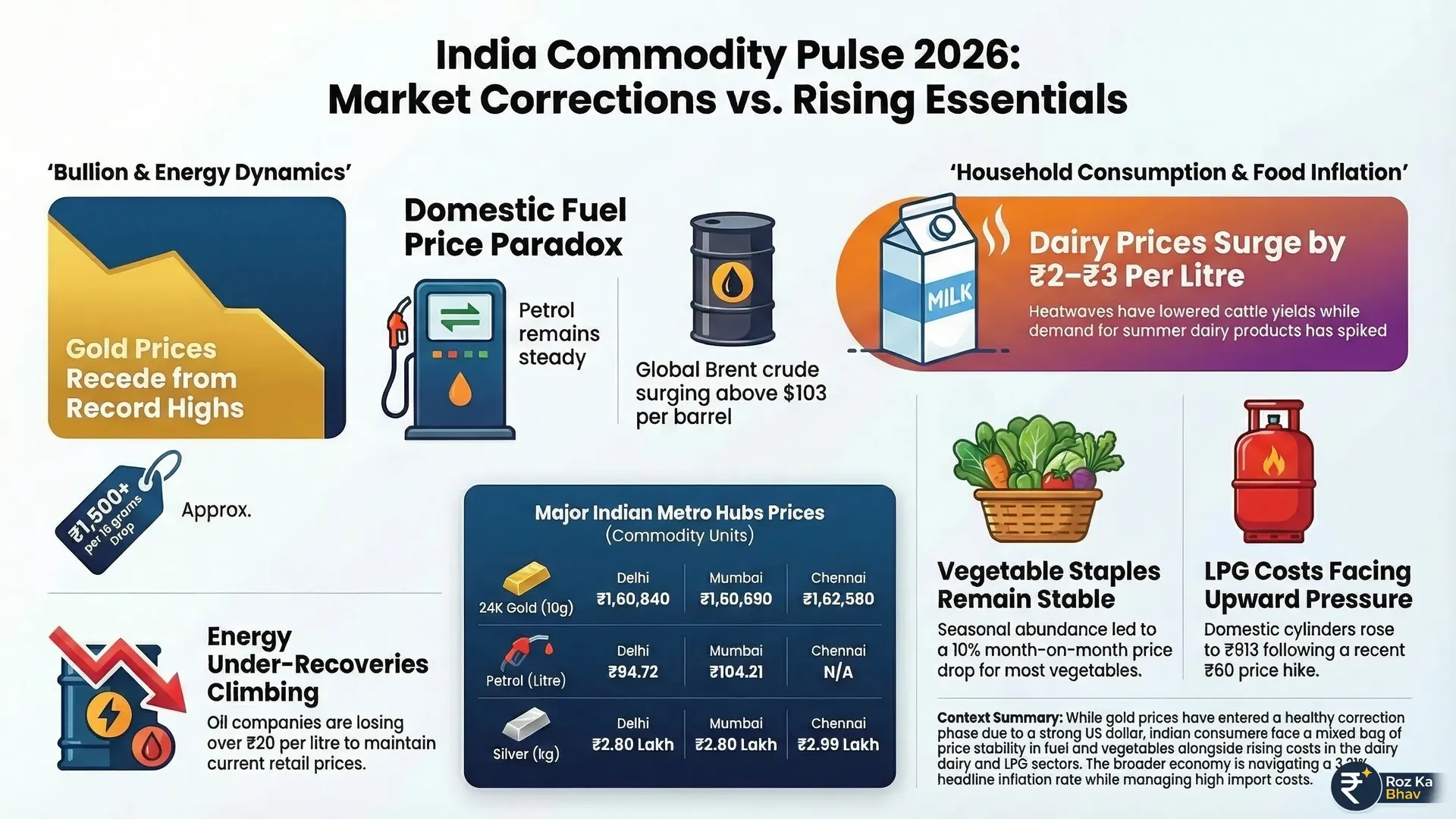
If you have been waiting to visit your jeweler, this weekend might offer a window of opportunity. Following a massive rally that pushed gold to record highs earlier this month, the precious metal is finally cooling off. As of today, March 14, 2026, 24K gold is trading at roughly ₹1,60,690 per 10 grams in Mumbai and Bengaluru a notable dip from the ₹1.62 lakh levels seen just 24 hours ago.
What is driving this sudden shift? The global market is currently locked in a tug-of-war. While tensions in West Asia typically drive investors toward gold, a surprisingly strong US Dollar is exerting downward pressure. When the dollar gains strength, gold usually takes a hit. For domestic buyers sidelined by recent record-breaking prices, this correction offers some much-needed breathing room.
City-wise Gold & Silver Rates (March 14, 2026)
Note: Data based on 2026-03-14.
| City | 24K Gold (10g) | 22K Gold (10g) | Silver (1kg) |
|---|---|---|---|
| Delhi | ₹1,60,840 | ₹1,47,450 | ₹2,79,900 |
| Mumbai | ₹1,60,690 | ₹1,47,300 | ₹2,79,800 |
| Chennai | ₹1,62,560 | ₹1,49,000 | ₹2,89,900 |
| Kolkata | ₹1,60,690 | ₹1,47,300 | ₹2,79,900 |
Silver has followed a similar path, with the industrial metal hovering around ₹2.80 lakh per kilogram in Delhi and Mumbai. Analysts at LiveMint describe this as a “muted” performance, noting that the surge in crude oil is currently offsetting potential gains silver might have seen from a weaker rupee.
Energy Sector Update: Global Oil Surges While Local Pumps Hold Firm
The Indian fuel market often moves independently of immediate global supply trends. Brent crude is currently trading above $103 per barrel as disruptions continue in the Strait of Hormuz a vital channel for 20% of the world’s oil. Despite these pressures, petrol in New Delhi remains steady at ₹94.77 per litre, with diesel at ₹87.67.
Market tracking indicates that while retail prices are frozen, Oil Marketing Companies (OMCs) like IOCL and BPCL are likely absorbing significant under-recoveries. Reports suggest these firms could be losing over ₹20 per litre on petrol to maintain economic stability. It is a delicate balancing act for the government, particularly as the rupee faces pressure from the strengthening dollar.
Today’s Retail Fuel Rates in Major Cities
Note: Data based on 2026-03-14.
| City | Petrol (per L) | Diesel (per L) | CNG (per kg) |
|---|---|---|---|
| New Delhi | ₹94.72 | ₹87.62 | ₹77.09 |
| Mumbai | ₹104.21 | ₹92.15 | ₹77.00 |
| Bengaluru | ₹102.92 | ₹89.02 | ₹90.10 |
| Hyderabad | ₹107.46 | ₹95.70 | ₹96.00 |
The LPG sector is seeing more movement. Following a ₹60 hike earlier this month, a 14.2 kg domestic cylinder in Delhi now costs ₹913. Commercial users are facing steeper costs, with 19 kg cylinders priced at approximately ₹1,884. This spike is likely behind the slight price increases seen at local restaurants recently.
Food and Dairy Prices: Rising Milk Costs and Vegetable Stability
While gold and fuel dominate the news, the most immediate impact on Indian households is coming from the dairy booth. Since March 1, brands like Amul, Mother Dairy, Gokul, and Chitale have raised prices by ₹2 per litre in several states. In Tamil Nadu, private dairies have increased rates by as much as ₹3 per litre, citing rising procurement costs and heavy summer demand.
An early 2026 heatwave is impacting milk production. As temperatures rise, cattle yields typically drop while demand for curd and buttermilk spikes. Data from The Hindu suggests the widening gap between farmer procurement rates and retail prices is creating friction in the rural economy.
Market Price Comparison: Vegetables and Staples
Note: Data based on 2026-03-14.
| Commodity | Wholesale (per kg) | Retail (per kg) | Price Trend |
|---|---|---|---|
| Onion (Big) | ₹22 | ₹33 – ₹35 | Stable |
| Tomato | ₹14 | ₹18 – ₹22 | Decreasing |
| Potato (Jyoti) | ₹11 | ₹18 – ₹21 | Stable |
| Milk (Full Cream) | – | ₹68 – ₹76 | Rising |
In contrast, vegetable prices remain manageable for now. February saw a 10% month-on-month drop in the cost of tomatoes, peas, and cauliflower. Mid-March finds potatoes holding steady at around ₹20 per kg in urban markets. While harvests in Uttar Pradesh and West Bengal are currently moving into cold storage to keep supply stable, history suggests onion prices may fluctuate as the summer intensifies.
Future Economic Outlook: Navigating Volatility
The Indian economy is currently navigating a complex geopolitical landscape. The Reserve Bank of India (RBI) has been active in the currency markets, selling US dollars to prevent the rupee from sliding past the 84 – 85 mark. This intervention is crucial because a weaker rupee makes essential imports from crude oil to electronics significantly more expensive.
Today’s drop in gold is viewed as a healthy correction rather than a crash. Analysts suggest that as long as conflicts in West Asia persist, a “fear factor” will likely support gold prices in the long term. For long-term investors, this dip could be a strategic entry point. However, the immediate concern for most consumers remains food inflation. While the headline CPI was 3.21% in February, the rising costs of milk and pulses are being felt more sharply in daily spending.
Frequently Asked Questions
1. Is now a good time to buy gold in India?
With prices dropping by over ₹1,500 today, it is a better entry point than last week. However, given the volatility linked to global tensions, staggered buying is often recommended.
2. Why aren’t petrol prices falling alongside gold?
Gold and petrol respond to different triggers. Gold is currently reacting to a stronger US Dollar, while petrol is tied to crude oil supply, which remains expensive due to Middle Eastern shipping disruptions.
3. Will milk prices continue to rise this summer?
If the heatwave persists, dairies may face higher procurement costs. Following the ₹2 hike in March, further price adjustments by May remain a possibility.
4. Why do gold rates differ between Delhi and Chennai?
Price variations across cities are due to differences in local VAT, transportation logistics, and the specific margins set by regional jewelry associations.
Source & Price Verification – Financial Markets
- Gold & Silver Prices: Data referenced from IBJA, MCX India, and international benchmarks.
- Petrol & Diesel Rates: Daily retail prices sourced from Indian Oil, HPCL, and BPCL.
- Commodity Market Data: Verified using MCX, NCDEX, and government statistical releases.
- Verification Process: Prices are cross-checked with at least two independent official or exchange-based sources before publication.
- Disclaimer: Market prices are indicative and may vary by city, tax structure, or intraday volatility.
Note: Prices are updated daily and cross-checked before publishing. If you notice any discrepancy, please email us at [email protected].
