

The Indian economy is navigating a complex path between domestic demand and global macroeconomic shifts. As mid-week trading continues, focus remains on the bullion markets and the increasing cost of living. For most Indian households, the stability found at the petrol pump is often overshadowed by erratic pricing in the local sabzi mandi: the vegetable market. Meanwhile; investors are turning to gold as a primary hedge against a volatile global equity climate.
Bullion Market: Analysis of Gold and Silver Rates
Gold remains the cornerstone of Indian savings and today’s market reflects its enduring appeal. We are seeing a demand resurgence as international spot prices approach critical resistance levels. Analysts at Dalal Street suggest that the pause in the US Federal Reserve’s aggressive rate hikes has provided momentum for non-yielding assets: particularly gold.
For those planning wedding purchases, it is wise to monitor the 24K and 22K price gaps. Domestic physical demand remains high despite current rates largely fueled by the wedding season and upcoming festivals. Silver frequently called the poor man’s gold is showing even stronger percentage gains, supported by industrial needs in the electronics and solar sectors.
Note: Data based on 2026-05-13.
| City | 24K Gold (per 10g) | 22K Gold (per 10g) | Silver (per kg) |
|---|---|---|---|
| Mumbai | ₹74,250 | ₹68,060 | ₹92,500 |
| Delhi | ₹74,400 | ₹68,210 | ₹92,500 |
| Chennai | ₹75,100 | ₹68,850 | ₹96,000 |
| Bengaluru | ₹74,250 | ₹68,060 | ₹91,700 |
Regional Bullion Highlights
Chennai: High physical gold consumption in South India often leads to elevated rates in Chennai. Today is no different; prices sit slightly above the national average. Local jewelers note that while the higher costs are noticeable, customer interest remains steady.
Delhi: The bullion market in the capital is reacting to a weaker Rupee. Since India imports a significant portion of its gold, any currency depreciation naturally raises domestic prices regardless of how international markets fluctuate.
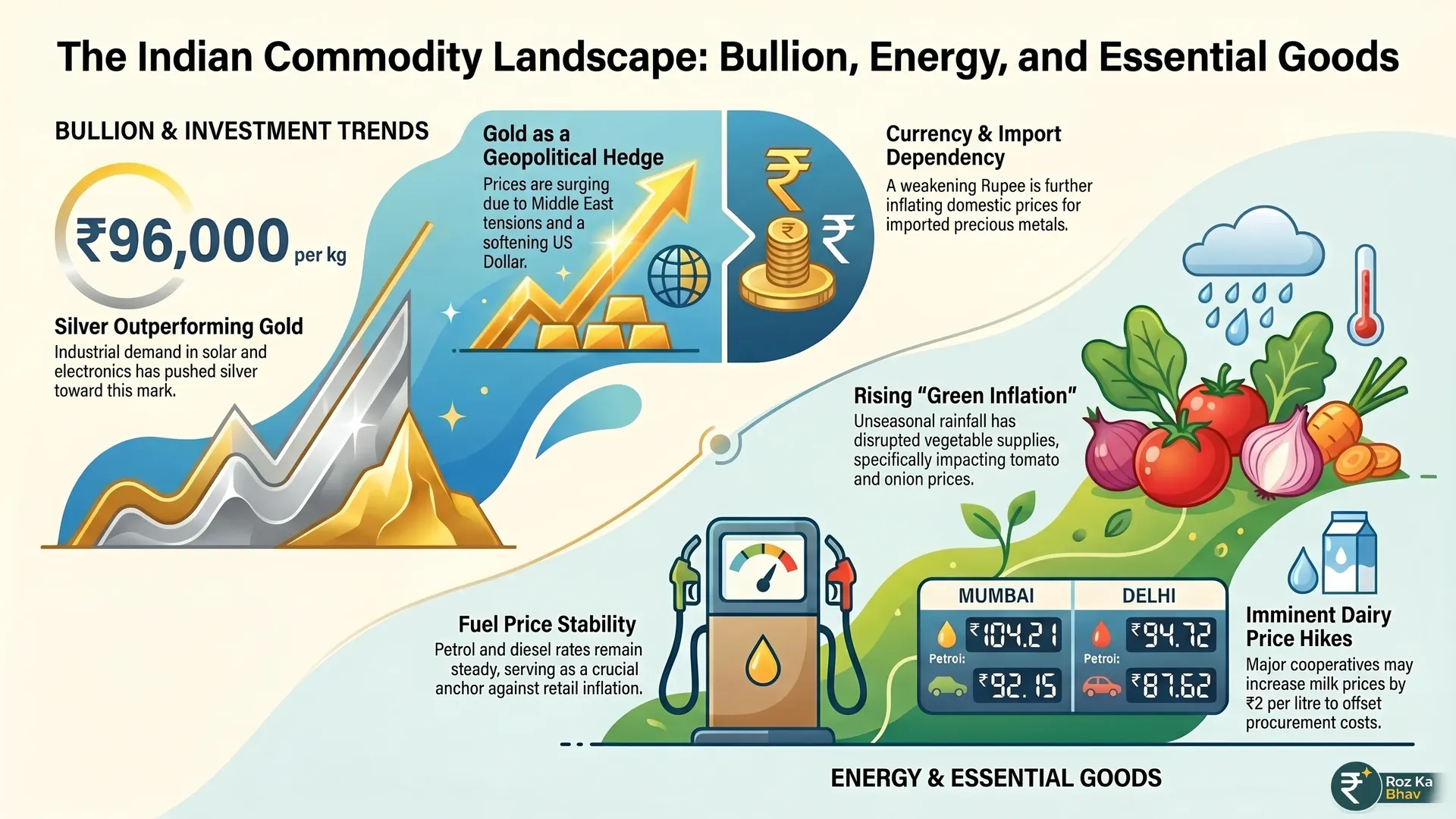
Energy Sector Update: Petrol, Diesel, and CNG Prices
India’s energy market stays regulated, with the government and Oil Marketing Companies (OMCs) keeping a firm grip on retail costs. Even with shifts in Brent Crude currently trading near $82 per barrel retail petrol and diesel prices have seen no major changes for several weeks.
The conversation is now turning toward Compressed Natural Gas (CNG). As the nation moves toward cleaner fuels, CNG pricing has become a major factor for the logistics and transport sectors. A senior economist at a public sector bank noted that stable fuel prices are currently the primary anchor preventing a sharper rise in retail inflation.
Note: Data based on 2026-05-13.
| City | Petrol (per Litre) | Diesel (per Litre) | CNG (per kg) |
|---|---|---|---|
| Mumbai | ₹104.21 | ₹92.15 | ₹73.50 |
| Delhi | ₹94.72 | ₹87.62 | ₹74.09 |
| Kolkata | ₹103.94 | ₹90.76 | ₹85.00 |
| Hyderabad | ₹107.41 | ₹95.65 | ₹89.00 |
Logistics and Transport Impact
Persistent diesel costs in southern hubs like Hyderabad and Bengaluru continue to affect last-mile delivery expenses. Although rates are currently flat, they remain at historically high levels. This creates a cascading effect on the price of moving produce from rural centers like Nashik to urban markets.
Daily Essentials: Trends in Vegetable and Dairy Markets
A trip to the local market reveals the reality of green inflation. Potatoes, onions, and tomatoes the core of the Indian kitchen show varying trends. While potato prices are holding steady due to cold storage supply, onions are trending upward as old stocks dwindle before the next harvest.
The dairy sector is also worth watching. After months of stability, milk procurement costs have climbed by roughly 5 – 7%. Major cooperatives including Amul and Mother Dairy are analyzing their margins. Industry experts believe a price increase of ₹2 per litre could be implemented before the monsoon season begins.
Note: Data based on 2026-05-13.
| Commodity | Avg. Price (Delhi) | Avg. Price (Mumbai) | Market Trend |
|---|---|---|---|
| Tomato (per kg) | ₹45 | ₹52 | Rising ↑ |
| Onion (per kg) | ₹35 | ₹40 | Stable ↔ |
| Potato (per kg) | ₹25 | ₹30 | Stable ↔ |
| Milk (Full Cream/L) | ₹66 | ₹67 | Likely to Rise ↑ |
Understanding High Vegetable Costs
The transition from heatwaves to sudden rain is the main factor here. Heavy rainfall in Maharashtra and Karnataka has impacted crops and slowed logistics. When transport is delayed, the perishable nature of items like tomatoes means a significant portion of stock may not reach the market tightening supply and raising consumer prices.
India Market FAQ
Gold is rising due to global geopolitical tension and the possibility of a US Federal Reserve rate cut. Locally, a weaker Rupee adds to the cost of importing the metal, pushing prices higher for Indian buyers.
Even if crude prices soften, OMCs are currently balancing previous losses. Significant retail price cuts are unlikely unless crude stays below $75 per barrel for a long period or the government lowers excise duties.
Prices depend on proximity to farms, transport costs, and local mandi fees. Cities located far from major production centers often see higher prices because of the logistical overhead involved in delivery.
Silver is benefiting from strong industrial demand in green energy sectors. Many analysts see potential for silver to outperform gold in the long term, though it typically carries higher price volatility.
Source & Price Verification – Financial Markets
- Gold & Silver Prices: Data referenced from IBJA, MCX India, and international benchmarks.
- Petrol & Diesel Rates: Daily retail prices sourced from Indian Oil, HPCL, and BPCL.
- Commodity Market Data: Verified using MCX, NCDEX, and government statistical releases.
- Verification Process: Prices are cross-checked with at least two independent official or exchange-based sources before publication.
- Disclaimer: Market prices are indicative and may vary by city, tax structure, or intraday volatility.
Note: Prices are updated daily and cross-checked before publishing. If you notice any discrepancy, please email us at [email protected].