

The Indian economy stands at a critical juncture. While domestic indices show resilience, the real story for the average citizen is unfolding in local mandis and jewelry showrooms. The convergence of international crude volatility, a strong US Dollar, and localized weather disruptions has created a complex pricing environment. Understanding these shifts is no longer exclusive to traders; it is essential for every household managing a monthly budget.
Bullion Market: Today’s Gold and Silver Analysis
Gold remains India’s preferred hedge against inflation: today’s rates reflect a market that is simultaneously optimistic and wary. Currently, 24-carat gold hovers between ₹73,000 and ₹74,500 per 10 grams across major metros. The primary driver is the Federal Reserve’s stance on interest rates; when the US Fed hints at maintaining higher rates for longer, the non-yielding yellow metal typically sees resistance. However, ongoing tensions in the Middle East provide a safe-haven floor for prices.
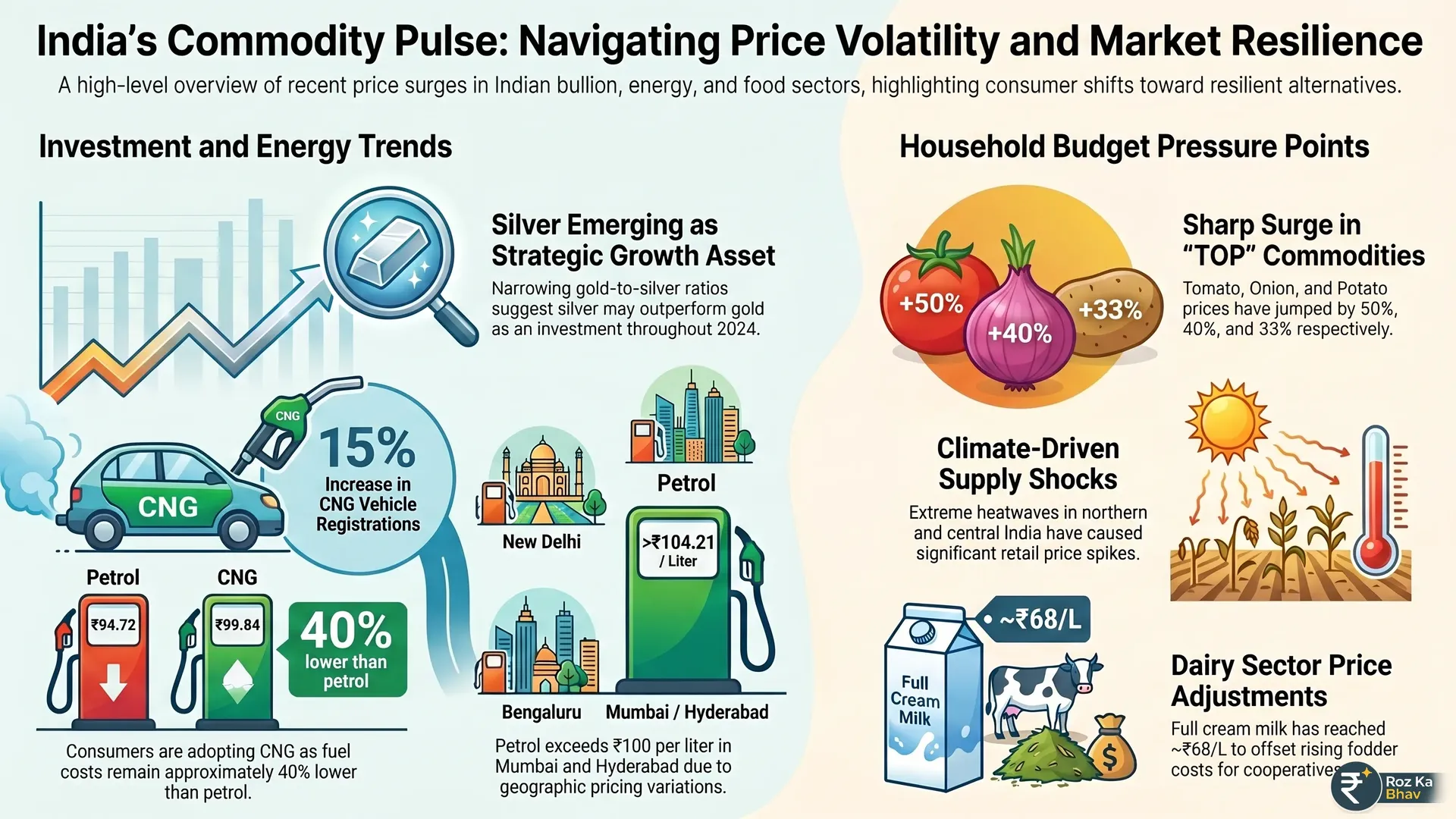
Silver often described as the “poor man’s gold” — is currently outperforming its sibling in terms of percentage growth. With industrial demand rising in the EV and solar panel sectors, the metal is trading near ₹85,000 per kg. Market analysts at Dalal Street note that the gold-to-silver ratio is narrowing; this suggests silver might be the dark horse for investors throughout the remainder of 2024.
Note: Data based on 2026-05-11.
| City | 24K Gold (10g) | 22K Gold (10g) | Silver (1kg) |
|---|---|---|---|
| Mumbai | ₹73,850 | ₹67,700 | ₹84,500 |
| Delhi | ₹74,000 | ₹67,850 | ₹84,500 |
| Chennai | ₹74,620 | ₹68,400 | ₹88,200 |
| Kolkata | ₹73,850 | ₹67,700 | ₹84,500 |
Regional Trends: Why Chennai Prices Lead the Market
Chennai consistently reports higher gold prices than Mumbai or Delhi, largely due to intense local demand and regional taxes. In South India, gold is a deep-rooted cultural necessity rather than just an investment particularly during wedding seasons. Analysts suggest that buyers monitoring the MCX (Multi Commodity Exchange) during afternoon sessions may find better entry points as domestic prices align with London and New York openings.
Energy Watch: Petrol, Diesel, and CNG Prices
Energy prices serve as the silent engine of inflation. While Oil Marketing Companies (OMCs) have kept petrol and diesel prices relatively stable lately, the undercurrents are shifting. Global Brent crude fluctuates between $82 and $87 per barrel. For the Indian consumer, price stability at the pump is a welcome relief; however, it impacts the balance sheets of corporations like IOCL and BPCL.
For your personal finances, the takeaway is clear: lower transport costs prevent the prices of delivered goods such as cement or groceries from skyrocketing. Nevertheless, any spike in international crude above $90 could trigger a revision in domestic retail prices once current election cycles conclude.
Note: Data based on 2026-05-11.
| City | Petrol (per L) | Diesel (per L) | CNG (per kg) |
|---|---|---|---|
| New Delhi | ₹94.72 | ₹87.62 | ₹74.09 |
| Mumbai | ₹104.21 | ₹92.15 | ₹73.50 |
| Bengaluru | ₹99.84 | ₹85.93 | ₹82.50 |
| Hyderabad | ₹107.41 | ₹95.65 | ₹89.50 |
The Growing Shift Toward CNG and Electric Vehicles
In cities like Pune and Ahmedabad, there is a clear transition toward CNG. With petrol exceeding the ₹100 mark in several states, the cost-per-kilometer for CNG remains nearly 40% lower. “We are observing a 15% YoY increase in CNG vehicle registrations,” notes a senior analyst from a leading automotive consultancy. For daily metro commuters, the current energy market suggests that diversifying fuel sources is the only effective way to hedge against long-term crude volatility.
Kitchen Essentials: Vegetable and Dairy Price Inflation
This is where the financial heat is most evident. Food inflation in India is currently driven by the TOP category: Tomatoes, Onions, and Potatoes. Intense heatwaves across northern and central India have caused significant crop damage, reducing supplies in major mandis like Azadpur (Delhi) and Vashi (Mumbai).
Potato prices, which were approximately ₹20/kg last year, have surged to nearly ₹40/kg in retail markets. Onions follow a similar trajectory as buffer stocks are released gradually to prevent market collapse. The dairy sector is also affected; leading cooperatives like Amul and Mother Dairy recently adjusted prices to compensate farmers for rising fodder costs.
Note: Data based on 2026-05-11.
| Commodity | Avg. Price (Today) | Price (Last Month) | Change (%) |
|---|---|---|---|
| Tomato (kg) | ₹60 – ₹80 | ₹40 – ₹50 | +50% |
| Onion (kg) | ₹35 – ₹45 | ₹25 – ₹30 | +40% |
| Potato (kg) | ₹35 – ₹40 | ₹25 – ₹30 | +33% |
| Milk (Full Cream, L) | ₹68 | ₹66 | +3% |
Expert Commentary on Domestic Food Inflation
Agricultural economist Dr. Arpit Verma observes: “The current spike is a classic supply-side shock. The gap between farm-gate and retail pricing is widening due to logistical inefficiencies caused by extreme weather.” For consumers, this necessitates a temporary shift in consumption moving from expensive greens toward pulses, which remain relatively stable due to government imports of Tur and Urda dal.
Frequently Asked Questions
While high rates typically dampen the appeal of gold, current prices are supported by central bank purchases particularly in China and India and geopolitical risks. Gold serves as the primary insurance policy during periods of global instability.
Significant price drops are unlikely unless Brent crude falls consistently below $75 per barrel. However, minor corrections may occur if the government reduces excise duties to control broader inflation.
Extreme weather including unseasonal rains followed by intense heatwaves has disrupted harvest cycles. Lower supply in wholesale mandis naturally drives retail prices upward.
Many analysts suggest silver has more growth potential than gold because of its extensive industrial use in green energy technologies. However, silver remains more volatile; it should remain just one part of a diversified portfolio.
Source & Price Verification – Financial Markets
- Gold & Silver Prices: Data referenced from IBJA, MCX India, and international benchmarks.
- Petrol & Diesel Rates: Daily retail prices sourced from Indian Oil, HPCL, and BPCL.
- Commodity Market Data: Verified using MCX, NCDEX, and government statistical releases.
- Verification Process: Prices are cross-checked with at least two independent official or exchange-based sources before publication.
- Disclaimer: Market prices are indicative and may vary by city, tax structure, or intraday volatility.
Note: Prices are updated daily and cross-checked before publishing. If you notice any discrepancy, please email us at [email protected].
