

As the sun rose over Mumbai’s financial district today, the air felt a bit heavy and it wasn’t just the pre-monsoon humidity. Traders and retail investors alike have been glued to their screens, watching a market that seems to be catching its breath after a marathon rally. Honestly, it has been a wild ride lately. If you have been tracking your portfolio this morning, you have likely noticed that the initial rush has shifted into a more cautious, wait-and-see mode.
Table of Contents
The global backdrop isn’t helping much either. With supply chain tensions lingering near the Strait of Hormuz and a stubbornly strong US Dollar, the Indian Rupee has been fighting to hold its ground. According to recent reports from The Hindu, the Reserve Bank of India is keeping a hawkish eye on headline inflation which remains the central bank’s primary target. This macro pressure is filtering down to everything from the price of the gold in your locker to the milk in your fridge.
Bullion Market: Analysis of Gold and Silver Rates
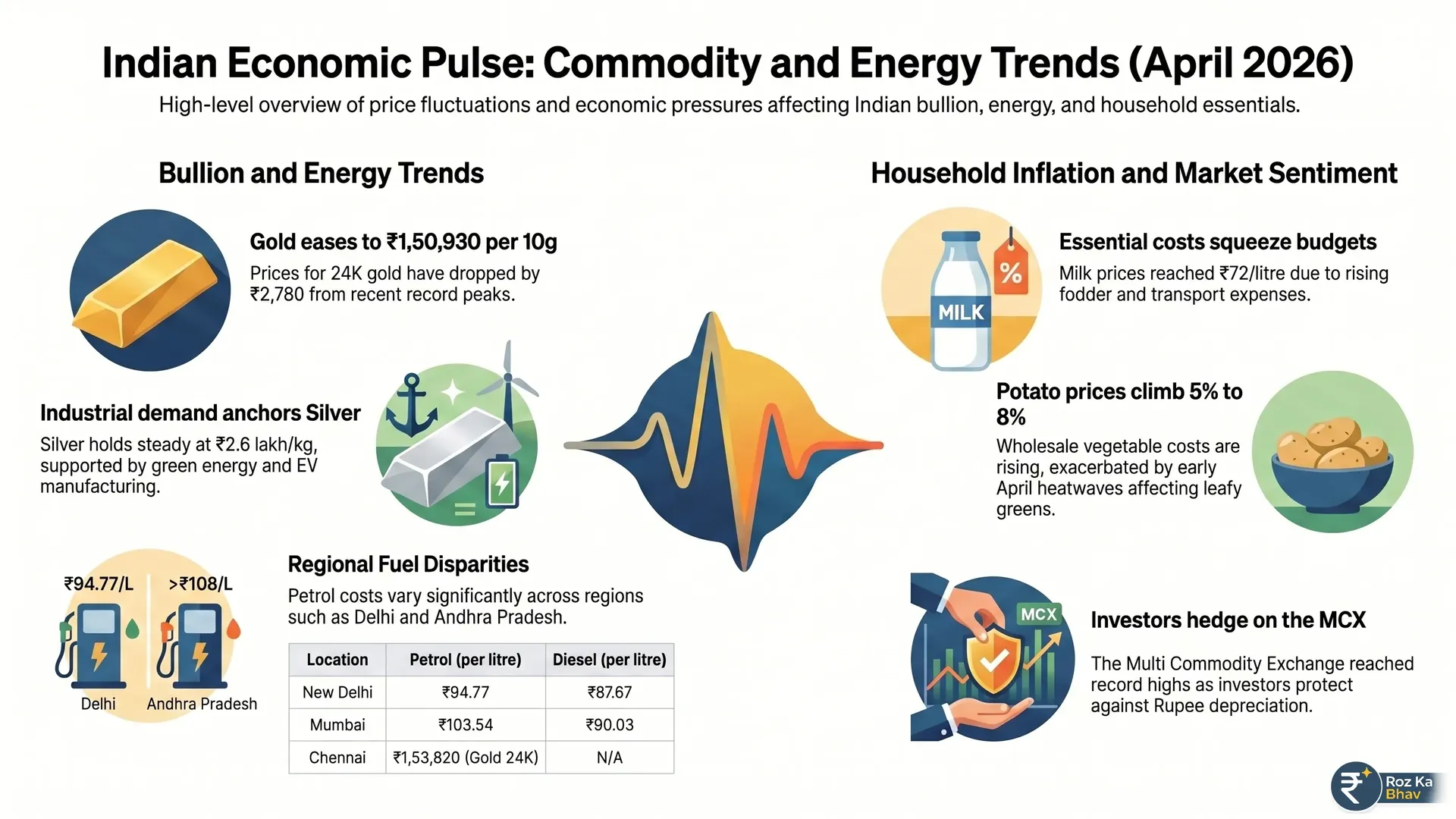
Look, if you were planning to buy gold for an upcoming wedding, today might offer a tiny sliver of relief. After a scorching rally that saw gold touching eye-watering levels earlier this month, domestic bullion rates have finally dipped. 24K gold is currently trading around ₹1,50,930 per 10 grams in Delhi and Mumbai. It is still incredibly high by historical standards, but it’s a breather from the ₹1.55 lakh levels we saw just ten days ago.
Silver, interestingly enough, has remained more resilient. It is holding steady at approximately ₹2,60,000 per kilogram. While gold reacts sharply to US Treasury yields and currency fluctuations, silver is finding support from industrial demand particularly in the green energy sector. Here is a breakdown of what you’ll likely see at your local jeweler today:
Note: Data based on 2026-04-29.
| Metal / Purity | Price (per 10g / kg) | Change (vs Yesterday) |
|---|---|---|
| Gold 24K (99.9%) | ₹1,50,930 | ▼ ₹2,780 |
| Gold 22K (91.6%) | ₹1,38,350 | ▼ ₹2,550 |
| Silver (99.9%) | ₹2,60,000 (per kg) | Unchanged |
City-Wise Gold Price Highlights
Chennai continues to lead with the highest rates largely due to local taxes and high physical demand with 24K gold priced at roughly ₹1,53,820. Meanwhile, Delhi and Mumbai are tracking closely to the national average. You know what they say: location is everything. If you’re in the South, you’re paying a premium today. Investors are now balancing these high prices against the risk of further inflation kind of like a financial tightrope walk.
Energy Watch: Petrol, Diesel, and CNG Price Trends
Moving on to the pumps, the news is boring, which is actually good news for once. Petrol and diesel prices have remained largely static today, April 29. After the minor adjustments we saw at the start of the week, the OMCs (Oil Marketing Companies) seem content to let things sit. In New Delhi, you’re still looking at ₹94.77 for a liter of petrol.
However, the national average is a bit of a misnomer because of how state VAT works. If you are filling up in Andhra Pradesh or Telangana, you’re still paying well over ₹108 per liter. It’s a stark contrast to the ₹82.46 seen in the Andaman and Nicobar Islands. Here is how the metros stack up today:
Note: Data based on 2026-04-29.
| City | Petrol (per Litre) | Diesel (per Litre) | CNG (per kg) |
|---|---|---|---|
| New Delhi | ₹94.77 | ₹87.67 | ₹77.09 |
| Mumbai | ₹103.54 | ₹90.03 | ₹80.50 |
| Chennai | ₹100.80 | ₹92.39 | ₹91.50 |
| Kolkata | ₹105.41 | ₹92.02 | ₹93.50 |
Wait, before you get too comfortable keep an eye on the global crude situation. Brent is hovering around $88 – 90, and any spike there will inevitably hit our shores with a lag. For now, CNG remains the budget-friendly savior for commuters, especially in Delhi where it is holding at ₹77.09 per kg. For a deeper dive into these regional variations, V3Cars provides an excellent live tracker for every state.
Kitchen Essentials: Vegetable and Dairy Inflation Outlook
Now, let’s talk about the stuff that actually hits your wallet every single morning. Vegetable Prices have been a bit of a roller coaster. While the winter crop helped stabilize prices for a while, the heatwaves in early April have started to impact the supply of leafy greens. Tomatoes and onions are currently stable, but potatoes have seen a slight 5 – 8% uptick in wholesale markets over the last fortnight.
Dairy is the real concern. We have seen a consistent rise in milk prices over the past year. Major cooperatives like Amul and Mother Dairy have cited higher fodder costs and logistics as the main drivers. It is one of those things where a ₹2 hike doesn’t seem like much until you realize it is the fourth time it has happened in eighteen months. You’re not imagining it: your chai is getting more expensive.
Note: Data based on 2026-04-29.
| Commodity | Avg. Price (Today) | Weekly Trend |
|---|---|---|
| Milk (Full Cream, 1L) | ₹68 – ₹72 | Stable (but High) |
| Onion (per kg) | ₹35 – ₹45 | Marginal Increase |
| Tomato (per kg) | ₹40 – ₹55 | Volatile |
| Potato (per kg) | ₹25 – ₹32 | Increasing |
Interestingly, the broader food index shows that while grain prices (like rice and wheat) are relatively protected by government buffers, the perishables category is where the middle class is feeling the squeeze. If you’re shopping this weekend, you might want to stick to seasonal gourds which are currently seeing a supply glut.
Analyst Commentary and India Market Sentiment
What does all this mean for the average person? Based on current exchange data and the performance of the Multi Commodity Exchange (MCX), it is clear we are in a high-cost environment. As reported by Markets Mojo, the MCX itself hit all-time highs today; this highlights just how much activity is happening in the commodity space. People are hedging. They are worried about currency depreciation, so they are piling into metals and energy futures.
Here is the thing: the Indian economy is showing remarkable resilience, but it’s expensive resilience. We are growing, sure, but we’re paying a premium for that growth. Whether it is the 132% surge in MCX stock prices over the last year or the record-high gold rates, the signal is the same: the value of hard assets is king right now.
If you are an investor, the advice from the floor is simple: do not chase the highs. This slight dip in gold might look like a buying opportunity, but with the US Fed still undecided on rate cuts, there could be more volatility ahead. For the regular household, it is about managing those daily expenses. Maybe skip the extra kilo of expensive tomatoes for now?
Frequently Asked Questions
1. Why is gold so expensive in India right now?
It is a combination of a weak Rupee against the Dollar, high import duties, and global geopolitical tension. When the world feels unstable, investors flock to gold driving up the price for everyone else.
2. Will petrol prices go down anytime soon?
Unlikely in the short term. While oil companies have not raised prices today, the high cost of crude oil and the need for the government to maintain tax revenue means significant cuts are not on the horizon.
3. Why do milk prices keep rising?
The dairy industry is facing lumpy skin disease recovery echoes, higher cattle feed costs (corn and soy), and increased cooling or transportation costs due to rising electricity and fuel rates.
4. Is it a good time to invest in Silver?
Many analysts believe silver has more room to run than gold because of its industrial use in solar panels and EVs. However, it is much more volatile, so only invest if you have a stomach for price swings.
Source & Price Verification – Financial Markets
- Gold & Silver Prices: Data referenced from IBJA, MCX India, and international benchmarks.
- Petrol & Diesel Rates: Daily retail prices sourced from Indian Oil, HPCL, and BPCL.
- Commodity Market Data: Verified using MCX, NCDEX, and government statistical releases.
- Verification Process: Prices are cross-checked with at least two independent official or exchange-based sources before publication.
- Disclaimer: Market prices are indicative and may vary by city, tax structure, or intraday volatility.
Note: Prices are updated daily and cross-checked before publishing. If you notice any discrepancy, please email us at [email protected].