

As the first rays of sunlight hit the Dalal Street trading floor this morning, the atmosphere was electric. Investors who had been on edge for weeks finally found a reason to breathe; the catalyst was a sudden, promising shift in the geopolitical landscape. Reports of resumed peace talks between the US and Iran in Islamabad have sent ripples of relief through global markets and India is reaping the rewards.
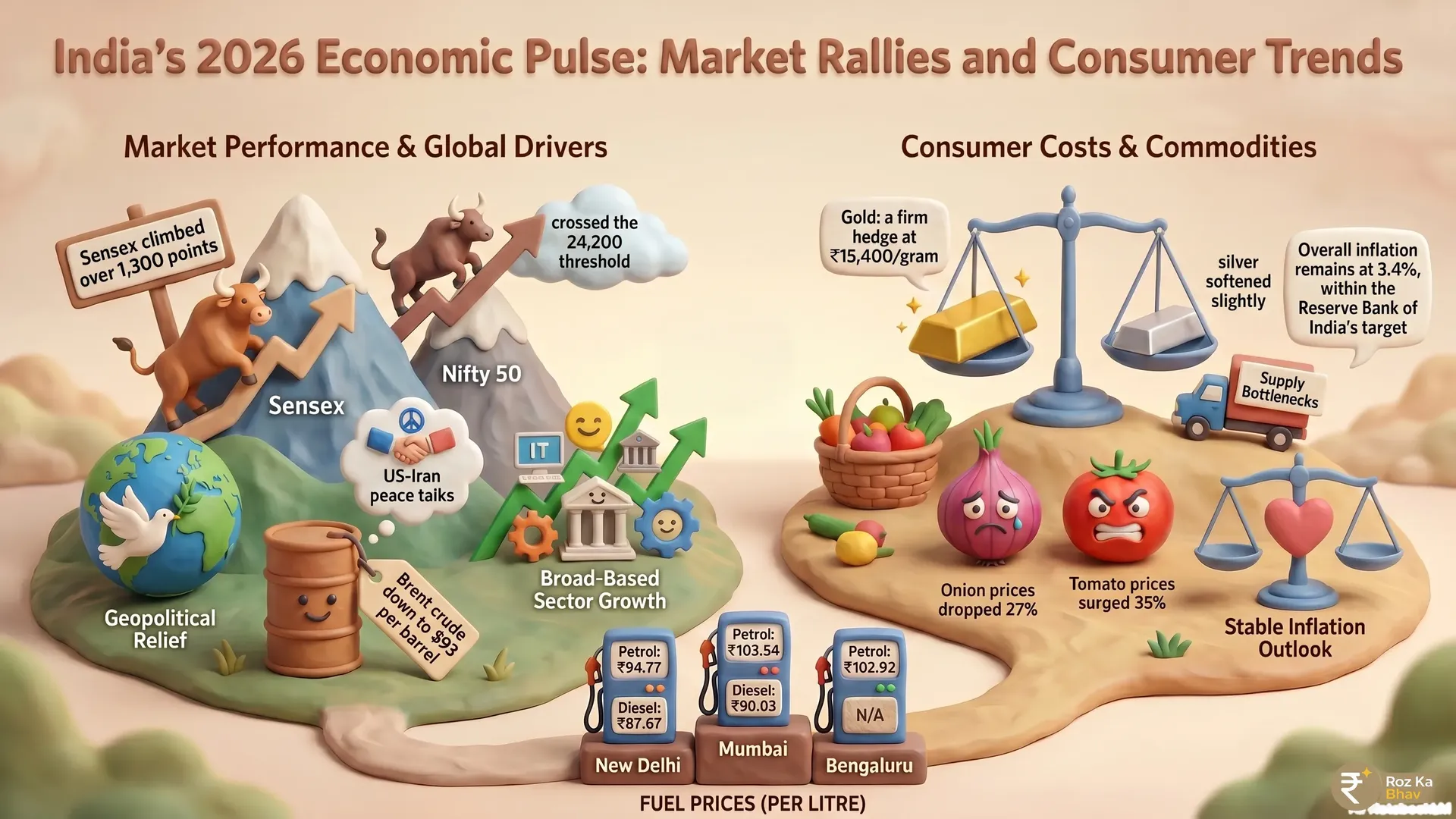
It is a welcome change. We have seen the Nifty 50 jump 280 points right at the open, while the BSE Sensex surged past the 78,000 mark. This is not just a small bounce: it is a broad-based rally. Every single sector is trading in the green; from IT giants to public sector banks, the buying interest is everywhere. What is even more interesting is how crude oil has reacted with Brent crude dipping toward $93 — easing the immediate threat of an energy-led inflation spike for the Indian economy.
Bullion Market: Gold and Silver Analysis
Energy Watch: Petrol, Diesel, and CNG Rates
Kitchen Essentials: Vegetable and Dairy Prices
Frequently Asked Questions
Bullion Market: Gold Prices Hold Firm as Silver Softens
Even with the risk-on mood in the stock market, gold has not lost its luster today. In fact, our market tracking shows that 24-carat gold is trading at approximately ₹15,409 per gram in major hubs like Delhi. One might expect investors to dump gold when stocks are performing well; however, that is not quite what is happening. Instead, we are seeing cautious stability investors are still hedging their bets just in case those peace talks hit a snag.
Silver, on the other hand, is having a rougher morning: it is down about ₹100 per kilogram in the Delhi retail market. It is still priced at a staggering ₹2,54,900 per kg, so it is hardly cheap by historical standards. However, the slight dip suggests some traders are moving capital into faster-moving equity assets to catch today’s 1.5% rally in the Sensex.
City-Wise Gold and Silver Rates (April 15, 2026)
Note: Data based on 2026-04-15.
| City | 24K Gold (per gram) | 22K Gold (per gram) | Silver (per kg) |
|---|---|---|---|
| Delhi | ₹15,409 | ₹14,126 | ₹2,54,900 |
| Mumbai | ₹15,394 | ₹14,111 | ₹2,55,300 |
| Chennai | ₹15,514 | ₹14,221 | ₹2,56,200 |
| Kolkata | ₹15,394 | ₹14,111 | ₹2,55,100 |
Energy Watch: Petrol and Diesel Prices Stay Stable
Fuel prices in India are incredibly sensitive to global politics. Despite the volatility in crude, retail petrol and diesel rates in major Indian cities remained unchanged as of 6:00 AM today. It is a relief when you consider that Brent crude was flirting with the $100 mark just a few days ago.
In Delhi, motorists are still paying ₹94.77 per litre for petrol. In Mumbai, the price remains stubborn at ₹103.54. While the government has kept prices steady to shield consumers from the West Asia shock, experts warn this may not last forever. If crude does not stay below $95 consistently, we could see a revision within the next 7 to 10 days. For those driving CNG vehicles, rates are also holding steady though commercial LPG prices are putting some pressure on the restaurant industry.
Current Fuel Rates in Major Indian Metros
Note: Data based on 2026-04-15.
| City | Petrol (per L) | Diesel (per L) | CNG (per kg) |
|---|---|---|---|
| New Delhi | ₹94.77 | ₹87.67 | ₹77.09 |
| Mumbai | ₹103.54 | ₹90.03 | ₹100.90 |
| Bengaluru | ₹102.92 | ₹90.99 | ₹99.10 |
| Kolkata | ₹105.41 | ₹92.02 | ₹98.20 |
Interestingly, while retail fuel is flat, aviation turbine fuel (ATF) and commercial LPG have seen some earlier hikes this month. You have probably noticed that your weekend dinner bill is a bit higher or that flight ticket for the summer vacation cost more than you expected. That is the indirect way energy costs are hitting your pocket right now.
Kitchen Essentials: Vegetable and Dairy Price Trends
Most Indian households are feeling the real pinch at the dinner table. According to latest data from Outlook Business, food inflation rose to 3.87% recently. It is something of a mixed bag, though.
If you are buying onions or potatoes, you are actually in luck. Prices for these staples have dropped significantly with onions down nearly 27% compared to last year. However, that relief is being cancelled out by tomatoes and cauliflower, which have seen a sharp spike in costs. Dairy is another area to watch; the FAO Dairy Price Index rose 1.2% recently the first increase since mid-2025. This means your daily milk packet or butter might see a marginal price hike if this trend continues.
Staple Commodity Price Index and Trends
Note: Data based on 2026-04-15.
| Category | Trend | Notes |
|---|---|---|
| Onions/Potatoes | Falling | Down 18 – 27% due to healthy harvest arrivals. |
| Tomatoes | Rising | Up 35% in some regions; supply chain bottlenecks. |
| Dairy (Milk/Butter) | Firming | Global price index rising; domestic prices stable for now. |
| Cooking Oil | Rising | Impacted by higher global vegetable oil costs. |
The persistence of high prices in specific vegetables is something the RBI is watching closely. While the overall inflation figure of 3.4% is within their target, the food and beverages component makes up almost 46% of the consumer basket. One bad harvest or a poor monsoon could change the game entirely.
Based on current exchange data and the slight cooling of crude, the outlook for the next week is cautiously optimistic. The rupee has also found some support today which helps keep the cost of imported edible oils in check. However, as any seasoned shopper knows, the price you see at the local mandi can change faster than a stock ticker.
Frequently Asked Questions
1. Why did the Indian stock market rise so sharply today?
The primary reason is the easing of geopolitical tensions in West Asia. The resumption of peace talks between the US and Iran has lowered crude oil prices which is a major positive for an oil-importing nation like India.
2. Will petrol and diesel prices decrease soon?
While global crude has dipped to around $93, domestic fuel prices are currently being held steady by the government. A price cut is unlikely unless Brent crude stays below $90 for a sustained period.
3. Is it a good time to buy gold?
Gold is currently near historical highs of over ₹15,400 per gram. While it remains a safe-haven asset, the current price reflects a significant geopolitical risk premium. Consult a financial advisor for long-term investment strategies.
4. Why are Vegetable Prices so volatile despite low overall inflation?
Vegetable prices are often driven by local supply shocks, weather conditions, and transportation costs rather than global economic trends. Currently, items like tomatoes are high due to seasonal supply gaps.
As we wrap up today’s report, the theme is clearly resilience. The Indian markets have shown they can bounce back quickly once global noise settles down. For the average consumer, steady fuel prices and falling onion rates provide some breathing room even if the gold coins for the next wedding just got a little more expensive. Stay tuned to Daily India Finance News for more updates as the session progresses.
Source: Detailed market data and inflation trends gathered from latest reports by Business Today and ET Now Digital.
Source & Price Verification – Financial Markets
- Gold & Silver Prices: Data referenced from IBJA, MCX India, and international benchmarks.
- Petrol & Diesel Rates: Daily retail prices sourced from Indian Oil, HPCL, and BPCL.
- Commodity Market Data: Verified using MCX, NCDEX, and government statistical releases.
- Verification Process: Prices are cross-checked with at least two independent official or exchange-based sources before publication.
- Disclaimer: Market prices are indicative and may vary by city, tax structure, or intraday volatility.
Note: Prices are updated daily and cross-checked before publishing. If you notice any discrepancy, please email us at [email protected].
