

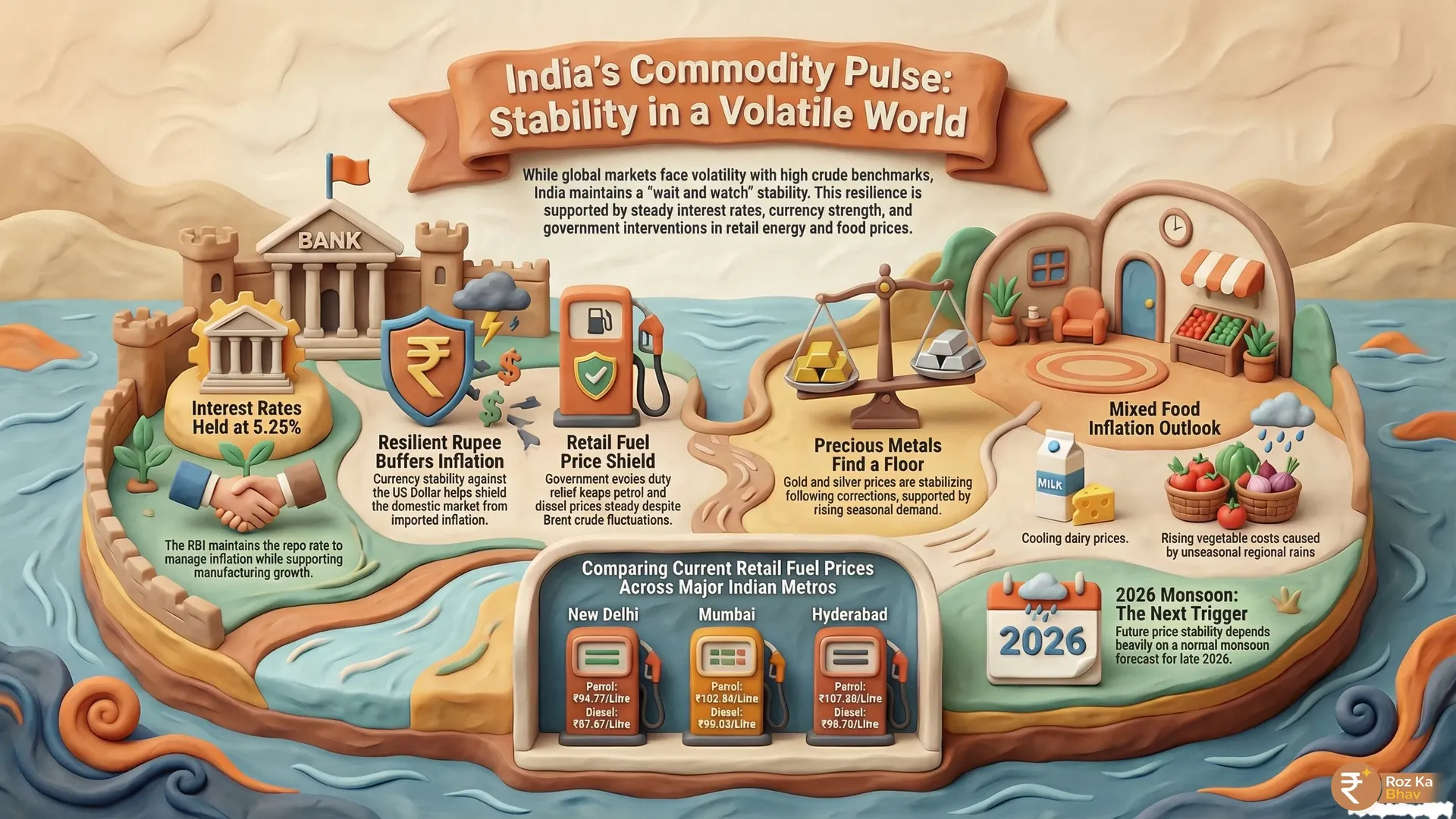
As the sun rose over the bustling markets of Mumbai and Delhi this morning, a sense of cautious stability seemed to have taken hold of the Indian economy. It has been a hectic few weeks for anyone tracking their portfolio or even just their grocery bill. While global benchmarks for crude oil have been dancing around the $110 mark; the domestic front is seeing a strategic “wait and watch” approach from both policy makers and retailers.
The reality is that we are in a transition phase. Market tracking shows that while the Reserve Bank of India (RBI) has kept the repo rate at 5.25%, the ripple effects of previous hikes are still being felt in the credit markets. This means that while home loan EMIs might have stopped climbing the cost of living has not exactly plummeted yet. Interestingly, the rupee is holding its ground against the dollar: providing a much-needed cushion against imported inflation.
Meanwhile, the NSE’s recent move to launch Dated Brent Crude Oil futures, as reported by ANI News, suggests that the Indian market is looking for localized ways to hedge against global energy shocks. This is a long-term play; however, for today, the focus remains squarely on the white metal correction and the cost of the morning glass of milk.
Bullion Market Update: Current Gold and Silver Prices
Gold has always been the heartbeat of Indian household savings and today’s rates reflect a market that is finally catching its breath. After the massive 17% correction seen earlier this month, the yellow metal is finding a floor. Analysts note that with the wedding season approaching in April; physical demand is starting to pick up, preventing further sharp slides in price.
In Mumbai and Kolkata, 24K gold is quoting at ₹14,809 per gram. It is a far cry from the highs of ₹17,300 seen at the start of March; but this might be a relief for many. Silver, on the other hand, is showing interesting resilience. The white metal is stabilizing at ₹2.45 lakh per kg in Delhi. If you are in Chennai you will find it slightly dearer at ₹2.50 lakh: typical for southern markets where industrial and ornamental demand often overlap.
Note: Data based on 2026-03-29.
| City | 24K Gold (per 10g) | 22K Gold (per 10g) | Silver (per 1 kg) |
|---|---|---|---|
| Mumbai | ₹1,48,090 | ₹1,35,750 | ₹2,45,000 |
| Delhi | ₹1,48,220 | ₹1,35,900 | ₹2,45,000 |
| Chennai | ₹1,49,020 | ₹1,36,600 | ₹2,50,000 |
| Bangalore | ₹1,48,090 | ₹1,35,750 | ₹2,45,000 |
Energy Sector Watch: Petrol, Diesel, and CNG Rates
If you are heading to the petrol pump today, things look remarkably similar to yesterday. Despite geopolitical noise and Brent crude hitting $112 per barrel state-run Oil Marketing Companies (OMCs) haven’t budged on retail prices. This is largely thanks to excise duty relief measures that allowed OMCs to absorb shocks. According to latest data on CarDekho, Delhi remains the most affordable metro for petrol at ₹94.77 per litre.
However, it is a different story for commercial transporters. The price of high-speed diesel is putting pressure on logistics; though the retail rate for regular diesel in New Delhi is holding steady at ₹87.67. CNG users are also seeing stability after minor hikes earlier this year. In Delhi you are looking at ₹77.09 per kg: which still makes it a significantly cheaper alternative to petrol, though the gap is narrowing slightly.
City-Wise Fuel Rates (March 29, 2026)
Note: Data based on 2026-03-29.
| City | Petrol (per L) | Diesel (per L) | CNG (per kg) |
|---|---|---|---|
| New Delhi | ₹94.77 | ₹87.67 | ₹77.09 |
| Mumbai | ₹103.54 | ₹90.03 | ₹80.50 |
| Hyderabad | ₹107.50 | ₹95.70 | ₹97.00 |
| Kolkata | ₹105.41 | ₹92.02 | ₹93.50 |
While prices are steady today, the under-recoveries for oil companies are mounting. If global crude stays above $115 for an extended period; the government might find it hard to maintain this status quo. For now enjoy the stability at the pump, but keep an eye on international headlines.
Kitchen Essentials: Vegetable and Dairy Price Trends
Moving from the fuel station to the kitchen the news is a bit more mixed. Inflation for food articles showed a slight decline in recent WPI data; but if you are the one doing the shopping, you know that averages do not always tell the whole story. Tomatoes and onions are currently in a period of seasonal adjustment. In most urban centers, tomato prices have seen a slight uptick due to unseasonal rains in key regions of Karnataka and Maharashtra.
Dairy, fortunately, is showing signs of cooling. After a year of relentless hikes major cooperatives like Amul and Mother Dairy have held prices steady this month. Based on the PIB Wholesale Price Index report, the milk inflation rate is hovering around 3%: which is much more manageable compared to the double digits seen in previous cycles.
Average Retail Prices (NCR Region)
- Milk (Full Cream): ₹66 per litre
- Onions: ₹35 – ₹40 per kg
- Tomatoes: ₹45 – ₹55 per kg
- Potato: ₹20 – ₹25 per kg
The green vegetable market is currently benefiting from the tail-end of the winter harvest. Spinach, cauliflower, and carrots are relatively affordable right now. But as we head into the peak summer months experts warn that logistics costs, driven by diesel prices, could start pushing these rates back up. It is a delicate balance that the Indian household has become very adept at navigating.
Economic Outlook: Future Projections for the Indian Consumer
Where does this leave us? The Indian economy is currently a study in contrasts. On one hand you have robust manufacturing growth and a stock market that remains attractive to foreign investors. On the other hand, the average consumer is still feeling the pinch of sticky inflation in services and certain food items.
The RBI’s decision to keep rates unchanged at 5.25% was a signal that they believe inflation is under control; however, they are not ready to declare victory just yet. Market tracking shows that the next big trigger will be monsoon forecasts. If we get a normal monsoon we could see a significant drop in food prices by the third quarter of 2026. If not, the central bank might have to keep interest rates higher for longer.
Frequently Asked Questions
1. Why is the gold price falling in India right now?
Gold prices have corrected mainly due to a recovery in the US dollar and higher global bond yields. Locally the reduction in some import duties and a seasonal dip in demand before the wedding season also contributed to the slide.
2. Will petrol prices increase soon?
While global crude is up, the Indian government has used excise duty buffers to keep prices stable. Unless Brent crude crosses the $120 mark consistently; a major retail price hike is unlikely in the immediate future.
3. Why are silver rates different in Chennai and Delhi?
Silver prices vary across cities due to local taxes, transportation costs, and regional demand. Chennai often has higher rates because of massive physical demand for silver articles and ornaments.
4. Is it a good time to invest in commodities?
Most analysts suggest that the current stabilization phase is a good time for staggered buying. Do not put all your money in at once: instead, buy in small quantities to average out your costs amid ongoing volatility.
Source & Price Verification – Financial Markets
- Gold & Silver Prices: Data referenced from IBJA, MCX India, and international benchmarks.
- Petrol & Diesel Rates: Daily retail prices sourced from Indian Oil, HPCL, and BPCL.
- Commodity Market Data: Verified using MCX, NCDEX, and government statistical releases.
- Verification Process: Prices are cross-checked with at least two independent official or exchange-based sources before publication.
- Disclaimer: Market prices are indicative and may vary by city, tax structure, or intraday volatility.
Note: Prices are updated daily and cross-checked before publishing. If you notice any discrepancy, please email us at [email protected].
