

RBI Monetary Policy: Stability Amidst Global Volatility
As the sun rose over Mumbai’s Dalal Street this Wednesday, the air was thick with anticipation. Traders and homemakers alike were searching for cues on the economy’s direction in the new financial year. A definitive answer arrived early this morning when RBI Governor Sanjay Malhotra took the podium. In a move that surprised very few but reassured many, the Monetary Policy Committee (MPC) decided to keep the repo rate unchanged at 5.25%. It is a classic wait-and-watch strategy: the central bank is juggling a projected GDP growth of 6.9% against a backdrop of global supply chain wobbles, especially through the Strait of Hormuz.
The reality is that while headline inflation remains somewhat under control, the RBI is clearly concerned about supply shocks. If you have been following the news, you know West Asia has been unstable lately this volatility is precisely why the central bank is playing it safe. They have kept the Standing Deposit Facility (SDF) at 5.00% and the Bank Rate at 5.50%. For consumers, this means home loan EMIs likely will not see a sudden spike today; however, they are not coming down anytime soon either.
Gold and Silver Price Analysis
Energy and Fuel Market Watch
Kitchen Essentials and Dairy Hikes
Market FAQs
Interestingly, the stock market did not remain idle. The GIFT Nifty surged by 3.5% earlier today, signaling a green opening for the Nifty 50 and Sensex. Investors seem to appreciate the stability the RBI is offering. Even with global inflation fears making bond yields harden elsewhere, India is striving to remain an island of steady growth. Yet, as seen in the commodity sections below, the story changes when looking at the shopping basket or the jewelry store window.
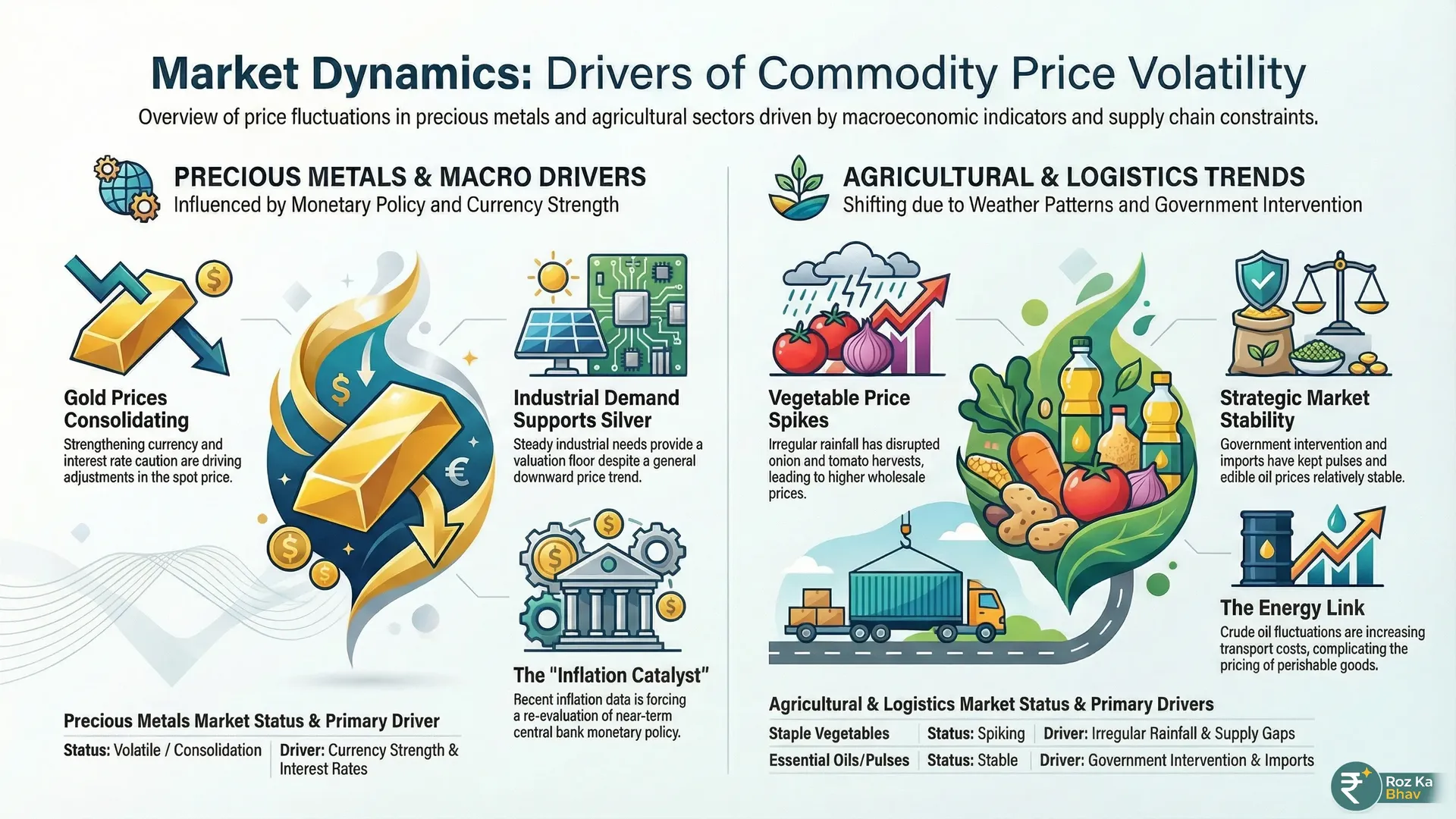
Bullion Market Update: Gold and Silver Prices Retreat
After months of relentless climbing, gold finally caught its breath today a relief for those planning summer weddings. Domestic 24K gold rates have slipped below the ₹1.5 lakh mark in several cities. According to reports from NDTV Profit, the drop is largely due to a conditional ceasefire in the Middle East. When the world feels even slightly safer, investors tend to pull money out of safe-haven assets like gold and shift back into the stock market.
Silver often called the poor man’s gold followed a similar path. In Mumbai, silver is retailing at roughly ₹2,31,170 per kg. While that sounds high, it is actually a softening from the peaks seen earlier this month. The southern markets, however, continue to demand a premium. In Chennai, gold is trading at the highest metro rate of ₹1,51,200 per 10 grams. The cultural appetite for the yellow metal in the south keeps the floor price significantly higher than in Delhi or Kolkata.
Note: Data based on 2026-04-08.
| City | 24K Gold (per 10g) | 22K Gold (per 10g) | Silver (per kg) |
|---|---|---|---|
| Delhi | ₹1,49,990 | ₹1,37,490 | ₹2,49,900 |
| Mumbai | ₹1,49,840 | ₹1,37,350 | ₹2,31,170 |
| Chennai | ₹1,51,200 | ₹1,38,600 | ₹2,54,900 |
| Kolkata | ₹1,49,840 | ₹1,37,350 | ₹2,30,860 |
If you are looking to buy, keep in mind that these prices exclude the 3% GST and making charges. Those making charges can be significant sometimes adding up to 35% to the final bill depending on the design’s intricacy. Analysts at Oneindia suggest that silver’s dual role as an industrial metal will keep it volatile as factory demand fluctuates alongside global macro headlines.
Energy Watch: Fuel Prices and the CNG Surge
Commuters in Delhi and Mumbai might have been bracing for a hike given global crude oil volatility; however, there is good news. Petrol and diesel prices have remained remarkably constant today. In the national capital, petrol is still sitting at ₹94.77 per litre. Mumbai remains the outlier among metros, where consumers are still paying over ₹103 for a litre of petrol. It is expensive, but it is not getting worse this morning.
However, the real story in the energy sector today is CNG. Over the last week, we have seen a massive 30% spike in CNG rates in some regions. In Delhi, CNG is now retailing at ₹100.90 per kg a huge jump from the ₹77 levels seen just a few weeks ago. This is putting immense pressure on auto-rickshaw drivers and delivery fleets. India imports a massive chunk of its natural gas; when the rupee weakens or international spot prices climb, City Gas Distribution (CGD) companies often pass that cost to the consumer.
Current Fuel Rates (April 8, 2026)
Note: Data based on 2026-04-08.
| City | Petrol (₹/Litre) | Diesel (₹/Litre) | CNG (₹/kg) |
|---|---|---|---|
| New Delhi | ₹94.77 | ₹87.67 | ₹100.90 |
| Mumbai | ₹103.54 | ₹90.03 | ₹81.00 |
| Bengaluru | ₹102.99 | ₹91.06 | ₹82.50 |
| Hyderabad | ₹107.46 | ₹95.70 | ₹93.00 |
The government insists that supplies are stable and there is no need for panic-buying. Refineries are reportedly running at high capacity. Still, for a daily commuter, that ₹100+ CNG rate feels like a significant dent in monthly savings. This trend may accelerate the push for electric vehicles further this year.
Kitchen Essentials: Summer Heat Impacts Dairy Prices
While the bullion market softened, the dairy aisle is heating up. Residents in Madhya Pradesh have likely noticed their morning tea getting more expensive: milk prices have jumped by ₹2 to ₹4 per litre across cities like Bhopal, Indore, and Jabalpur. The Madhya Pradesh Milk Vendors Federation pointed to summer pressure. As the heat increases, green fodder becomes scarce, and cows produce less milk. It is a seasonal supply-and-demand crunch that hits every summer, but it feels particularly sharp this year.
Vegetable Price are also showing signs of summer fever. While staples like potatoes and onions are relatively stable, leafy greens are seeing a 10 – 15% uptick in local mandis. Transport costs remain high due to recent spikes in commercial LPG and ATF (Aviation Turbine Fuel). As noted by The Economic Times, commercial 19 kg LPG cylinders have seen a rise of nearly ₹200 in some metros, which eventually trickles down to the cost of restaurant meals and vegetable vendor margins.
Household Commodities Snapshot
- Loose Milk: Increased to ₹63/litre in Indore (up from ₹60).
- Commercial LPG: Up by ~₹200 (19kg cylinder) in Delhi and Kolkata.
- Green Chillies & Tomatoes: Reporting a 10% week-on-week rise in Northern mandis.
- Domestic Cooking Gas: No change this week; prices remain steady at March levels.
The current economic landscape is a mixed bag. Investments in gold might be worth slightly less today than yesterday, and loan interest hasn’t dropped. However, daily expenses especially for dairy consumers or CNG vehicle owners are rising. It is a period of sticky inflation where big-picture numbers look stable, but small daily purchases continue to nibble away at the wallet.
Frequently Asked Questions
1. Why did gold prices fall today in India?
Gold prices dropped mainly because of a fragile ceasefire in West Asia, reducing the demand for safe-haven investments. When geopolitical tensions ease, investors often move money back into riskier assets like stocks.
2. Will my home loan EMI decrease after the RBI policy?
No. Since the RBI kept the repo rate unchanged at 5.25%, most banks will likely keep their lending rates steady. You will not see a hike, but a decrease is also not expected right now.
3. Why is milk getting more expensive in summer?
Milk production naturally declines during hot summer months as cattle face heat stress and fodder costs rise. This supply shortage, combined with transport costs, leads to price hikes of ₹2 to ₹4 per litre.
4. Is it a good time to buy silver?
Silver has seen a 2% correction recently. While it is cheaper than its recent peaks, it remains volatile. For long-term investors, these dips can be entry points, but be prepared for short-term swings based on industrial demand.
Source & Price Verification – Financial Markets
- Gold & Silver Prices: Data referenced from IBJA, MCX India, and international benchmarks.
- Petrol & Diesel Rates: Daily retail prices sourced from Indian Oil, HPCL, and BPCL.
- Commodity Market Data: Verified using MCX, NCDEX, and government statistical releases.
- Verification Process: Prices are cross-checked with at least two independent official or exchange-based sources before publication.
- Disclaimer: Market prices are indicative and may vary by city, tax structure, or intraday volatility.
Note: Prices are updated daily and cross-checked before publishing. If you notice any discrepancy, please email us at [email protected].
